Thermal Imaging Lens Guide: LWIR, MWIR, SWIR Optics
Cross-wavelength infrared lens and thermal imaging lens engineering for OEM LWIR 8–14 μm, MWIR 3–5 μm, and SWIR 0.9–1.7 μm systems. Germanium, silicon, fused silica material trade-offs.
Introduction
Selecting the right thermal imaging lens or infrared lens for OEM thermal imaging integration requires balancing wavelength coverage, material constraints, and environmental stability. This guide details cross-wavelength optics for LWIR (8–14 μm), MWIR (3–5 μm), and SWIR (0.9–1.7 μm) applications in security, industrial process control, automotive ADAS, defense, UAV, and medical imaging programs. We focus on practical trade-offs between germanium, silicon, fused silica, and chalcogenide glass materials that determine whether an infrared lens survives field deployment.
The ## my insight section ahead distills field experience: after 50+ infrared lens and thermal imaging lens deployments across automotive, defense, and industrial inspection programs, the top three procurement failures are inadequate athermalization, undetected detector telecentricity mismatch, and surface quality lapses that only appear after thermal cycling. The infrared lens specification sheet is the entry ticket; environmental fitness determines whether the program ships.
Lens Material Physics
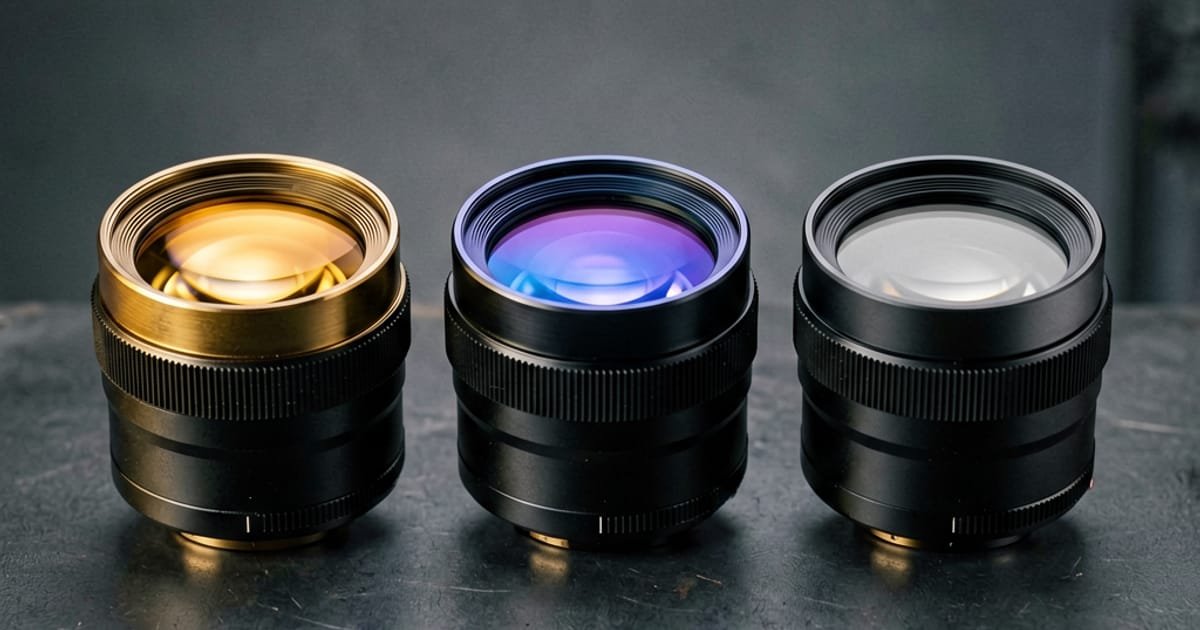
The foundation of any thermal imaging lens design lies in the optical material properties. Germanium dominates the LWIR and MWIR spectrum due to its high refractive index and transmission characteristics, but its physical behavior introduces significant engineering challenges.
Germanium refractive index is wavelength-dependent: n ≈ 4.024 at 3 μm, decreasing to ≈ 4.004 at 5 μm and ≈ 4.003 at 10.6 μm. This dispersion necessitates careful surface curvature management to minimize chromatic aberrations. The thermo-optic coefficient ($dn/dT$) is also wavelength-dependent: ≈ +2.8×10⁻⁴/K at 3.4 μm and ≈ +3.96×10⁻⁴/K at 10.6 μm. The positive $dn/dT$ means the refractive index increases as temperature rises, causing focal shift unless compensated.
Germanium transmits from ~2 μm through ~14 μm, but phonon absorption causes uncoated transmission to drop from ~45% at 12 μm to ~20–25% at 13 μm and ~5–10% at 14 μm for 2 mm thick material. Industrial LWIR thermal imaging lens designs commonly span 8–14 μm; the 14 μm end requires SNR budgeting but is not physically impossible. Germanium CTE is approximately 6.0 ppm/K (5.7–6.1 range). ZnSe, with transmission from 0.6 to 20 μm, is often paired with germanium in hybrid infrared lens designs to reduce cost and weight.

| Parameter | Value / Range | Engineering Impact |
|---|---|---|
| Refractive Index (n) | 4.024 @ 3 μm → 4.003 @ 10.6 μm | Wavelength-dependent dispersion requires achromatic design. |
| Thermo-optic Coeff (dn/dT) | +2.8×10⁻⁴/K @ 3.4 μm to +3.96×10⁻⁴/K @ 10.6 μm | Major cause of focal shift; drives athermalization needs. |
| CTE | ~6.0 ppm/K | Mechanical stress on mounts; affects housing material choice. |
| Transmission | 45% @ 12 μm → 25% @ 13 μm → 10% @ 14 μm (2 mm uncoated) | LWIR end usable with SNR budget; not negligible above 12 μm. |
| Single Surface Reflectance | ~36% (n ≈ 4.0) | Significant light loss; AR coatings mandatory. |
LWIR & MWIR Thermal Imaging Lens Design
Long-Wave Infrared (LWIR) thermal imaging lenses operate in the 8–14 μm band for uncooled cameras in security, building inspection, and general surveillance. This wavelength range corresponds to the atmospheric infrared window where thermal radiation passes through the atmosphere with minimal absorption. Germanium dominates, often paired with ZnSe or chalcogenide glasses. Uncooled detectors operate near ambient temperature, but germanium's $dn/dT$ still demands athermalization across -40°C to +85°C. Passive athermalization combines germanium elements with low CTE metals such as Invar (Fe-36Ni, CTE ~1.2 ppm/K). For application-specific guidance, see our analysis of LWIR lens selection for UAV platforms.
Invar is an iron-nickel alloy ideal for lens barrels and mechanical structures that must stabilize the optical train. When designing an LWIR thermal imaging lens, account for germanium's ~36% single-surface reflectivity; AR coatings optimized for 8–12 μm are mandatory. For extreme stability, Invar is preferred; titanium (CTE ~8.6 ppm/K) serves weight-sensitive applications with additional athermalization.
Mid-Wave Infrared (MWIR) thermal imaging lenses operate in the 3–5 μm band for high-performance applications including missile guidance, industrial process monitoring, and scientific research. Cooled detectors dominate: InSb typically at 77K (liquid nitrogen) and MCT at 120–150K (Stirling cryocoolers). MWIR lenses typically use f/1.5 to f/4.0 apertures; f/0.9 designs are extremely rare, require complex aspheric surfaces, and serve only specialized military or astronomy programs. Hybrid or passive athermalization is preferred for MWIR to reduce complexity and power consumption near cryocoolers.
| Specification | Typical LWIR Value | Typical MWIR Value |
|---|---|---|
| Wavelength Band | 8–14 μm | 3–5 μm |
| F/# Range | f/1.0 – f/1.4 (typical); f/1.8 long-focus | f/1.5 – f/4.0 (typical); f/0.9 special |
| Focal Length | 10–100 mm | 25–300 mm |
| Operating Temp | -40°C to +85°C | -40°C to +85°C (housing) |
| Detector Compat | Uncooled VOx / a-Si microbolometer | Cooled InSb / MCT |
| Mount Material | Invar (Fe-36Ni, CTE ~1.2 ppm/K); alt Titanium | Invar or stainless steel |
| Coating | Broadband AR (8–12 μm) | Broadband AR (3–5 μm) |
SWIR Thermal Imaging Lens Design & Athermalization Strategies
Short-Wave Infrared (SWIR) thermal imaging lenses operate in the 0.9–1.7 μm band. SWIR optics share many similarities with visible light lens design. Silicon and low-OH fused silica (e.g., Suprasil 300, Infrasil 302) are the primary materials; standard N-BK7 transmits adequately only in the 0.9–1.1 μm sub-band. SWIR serves night vision, agricultural monitoring, semiconductor inspection, and pharmaceutical sorting.
SWIR detectors are typically uncooled InGaAs at ambient temperature, though some high-performance InGaAs sensors use TEC cooling for noise reduction. Achromatic lens designs are standard to correct chromatic aberration across the band. Standard visible-light manufacturing processes reduce lead times and costs for OEMs. Housing materials must transmit SWIR: many plastics absorb in this band, so metal housings or coated polymers are preferred.
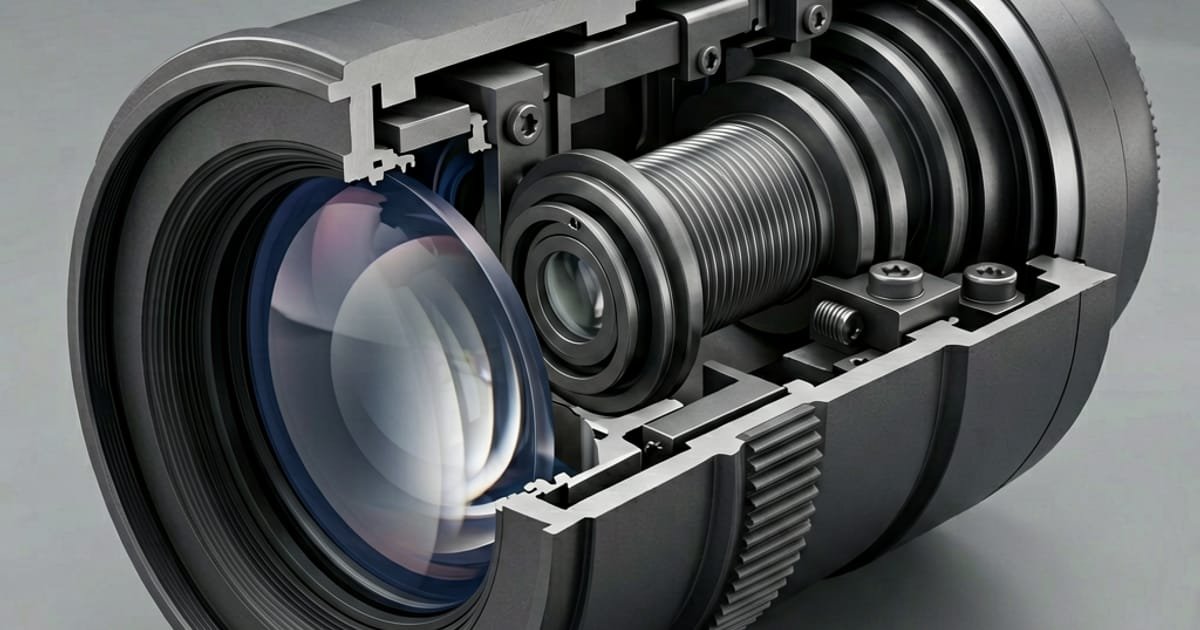
Athermalization stabilizes the focal point of an infrared lens against temperature changes, which is non-negotiable for field-deployed thermal imaging lens designs. The core principle of athermalization is to combine optical and mechanical elements with offsetting thermal coefficients to maintain focus across the operating temperature range. The positive $dn/dT$ of germanium causes lens power to increase with temperature, leading to defocus. Designers must introduce negative compensation. Chalcogenide glasses such as AMTIR-1 (Ge₃₃As₁₂Se₅₅), with dn/dT ≈ +7.2×10⁻⁵/K at 10.6 μm, are commonly used in passive athermalized LWIR thermal imaging lens designs. For a deeper look at athermalization engineering, see athermalized LWIR lenses engineering.
Passive athermalization combines germanium elements with materials of low or negative CTE (Invar or specialty plastics); the lens barrel's thermal expansion offsets the focal shift from refractive index change. Active athermalization uses a microprocessor to drive a stepper motor or voice coil actuator that adjusts lens position as temperature changes; this offers wider thermal range but adds complexity, power draw, and failure modes.
| Specification | Typical SWIR Value |
|---|---|
| Wavelength Band | 0.9–1.7 μm |
| F/# Range | f/1.2 – f/2.8 |
| Focal Length | 8–50 mm |
| Operating Temp | -20°C to +70°C |
| Detector Compat | Uncooled InGaAs (ambient or TEC) |
| Material | Silicon / low-OH fused silica |
| Coating | Standard AR (0.9–1.7 μm) |
| Strategy | Mechanism | Pros | Cons |
|---|---|---|---|
| Passive | Material/structural compensation (Invar, chalcogenide) | No power, high reliability | Limited correction range |
| Active | Motorized focus (stepper / voice coil) | Wide thermal range, high precision | Power draw, complexity |
| Hybrid | Combined approach | Balanced performance | Design complexity |
Detector Compatibility & OEM Procurement
Matching an infrared lens to the detector requires aligning focal plane distance, back focal length, and image-space telecentricity. For uncooled microbolometers, image-space telecentric lenses are preferred to minimize vignetting and shading. For guidance on selecting infrared lens parameters, see how to choose the right infrared lens.
In cooled MWIR systems, the detector is housed in a cryostat presenting vacuum seal and thermal isolation challenges. The lens-cryostat assembly must meet a helium leak rate of <1×10⁻⁸ atm-cc/s to prevent vacuum degradation; this is a system integration spec, not a standalone lens spec. The lens material must also withstand thermal cycling from cool-down and warm-up phases.
OEM procurement requires surface quality verification (λ/10 PV at 633 nm for MWIR; λ/4 to λ/2 PV at 10.6 μm for LWIR; 60-40 scratch-dig standard for IR), detailed ray-trace files (Zemax/Code V), MTF charts, and supply chain assessment. Lead times for custom germanium infrared lens fabrication are longer than for visible-light optics due to material hardness.
🚩 Red Flag 1: Germanium transmission above 12 μm. Specs that claim "2–14 μm" without wavelength-dependent transmission data hide real SNR loss. Require transmittance curves.
🚩 Red Flag 2: MWIR F/0.9 design claims. Achievable in theory but rare in OEM supply chains. Verify with prototype testing.
🚩 Red Flag 3: λ/10 PV specification without test wavelength. λ/10 @633 nm equals λ/1.7 @10.6 μm, which is far too loose for LWIR. Always specify test wavelength.
🚩 Red Flag 4: Detector telecentricity direction. Most thermal imaging lens designs use image-space telecentricity, not object-space. Confirm with the supplier.
Conclusion
Choose the right thermal imaging lens by aligning wavelength, detector compatibility, and athermalization strategy with the operational environment. Prioritize cross-wavelength coverage, surface quality, and supply chain reliability to ensure long-term program success.
Contact WANBAO IR at /contact/ to discuss your thermal imaging lens selection. Our engineering team can help match detector interfaces, operating temperature windows, and certification requirements to your OEM program.
| Application | Wavelength | Recommended Lens Type | Key Consideration |
|---|---|---|---|
| General Surveillance | LWIR | Ge-based, passive athermalized | Cost vs. performance balance |
| Precision Inspection | MWIR | Ge/Si hybrid, passive athermalized | Resolution and f/number |
| Night Vision / Agri | SWIR | Si / low-OH fused silica, achromatic | Visibility through haze |
| Harsh Industrial | LWIR/MWIR | Hermetically sealed, Invar mount | Thermal stability and durability |
Related Articles
- Infrared Lens Engineering Guide: LWIR, MWIR, SWIR Optics for OEM Thermal Imaging
- Athermalized LWIR Lenses: Why Thermal Stability Matters in Infrared Imaging
- Germanium Lens Manufacturer in China: How to Source High-Quality LWIR Optics
- LWIR Lens for UAV Drone: Selecting Thermal Optics for Unmanned Aerial Thermal Imaging
- How to Choose the Right Infrared Lens: 5 Key Parameters Every Buyer Should Know
About Sichuan Wanbaohui Technology Co., Ltd. — WANBAO IR is a professional supplier and exporter of precision infrared optical components. We design and manufacture high-quality thermal imaging lenses for OEMs worldwide, spanning LWIR, MWIR, and SWIR technologies for automotive ADAS, defense and security, industrial process control, UAV imaging, and medical thermography applications.
📩 Contact us at: sales@wanbaoir.com | Website: https://wanbaoir.com
Related reading
- Chalcogenide Glass vs Germanium Infrared Lenses: LWIR Optics Material Selection Guide
- Infrared Lens Coatings: DLC vs Standard AR vs Hybrid for Harsh Environments
Have a technical inquiry?
Our sales team responds within 24 hours with specifications, pricing, and technical consultation.
CONTACT US →