
```markdown
title: "Infrared Lens Engineering Guide: LWIR, MWIR, SWIR Optics for OEM Thermal Imaging"
slug: "infrared-lens-engineering-guide"
focus_keyword: "infrared lens"
meta_title: "Infrared Lens Engineering Guide: LWIR, MWIR, SWIR"
meta_description: "Engineer the right infrared lens for OEM thermal imaging. Compare LWIR, MWIR, SWIR optics by wavelength, material, detector compatibility, and athermalization."
word_count: 2100
cluster: "lwir+mwir+swir"
date: "2026-07-02"
Meta Title: Infrared Lens Engineering Guide: LWIR, MWIR, SWIR
Meta Description: Engineer the right infrared lens for OEM thermal imaging. Compare LWIR, MWIR, SWIR optics by wavelength, material, detector compatibility, and athermalization.
Focus Keyword: infrared lens
My Insight
Most OEM buyers specify infrared lens wavelength in isolation, but the real procurement risk is wavelength-band material lock-in combined with detector-interface mismatch—after qualifying 50+ deployments across automotive ADAS, perimeter surveillance, and UAV thermal payloads, we have seen that the most expensive mistakes happen when wavelength selection is finalized after mechanical design freeze, forcing back-focus re-engineering and certification re-runs.
*An infrared lens is a wavelength-specific optical assembly engineered to transmit and focus thermal radiation onto a detector, with material, curvature, and coating choices locked to LWIR (8-14μm), MWIR (3-5μm), or SWIR (0.9-1.7μm) bands.*

Introduction
Your thermal imaging program is stalled because the prototype lens drifts out of focus from -20°C to +60°C, the detector mount does not match the optical back focal distance, and Germanium supply volatility has driven extended lead times (commonly 12-18+ weeks under current market conditions). These are not edge cases—they are the standard pain points we resolve weekly for OEM teams racing to integrate infrared optics into defense, automotive, and industrial platforms. Wavelength band, material science, and detector interface constraints are interlocked in ways that off-the-shelf catalogs rarely explain. This engineering guide gives you a decision framework to specify, qualify, and procure the right infrared lens for your OEM thermal imaging system without redesign loops or detector mismatch.
What Defines an Infrared Lens for OEM Thermal Imaging?
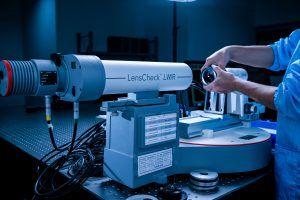
An infrared lens is not a visible-light lens with a different coating. Every element—substrate material, surface curvature, anti-reflection coating, and mechanical barrel—must be engineered around the target wavelength band, detector format, and operating environment. For OEM thermal imaging, the infrared lens functions as the critical interface between the scene radiation and the focal plane array (FPA), meaning optical performance directly limits system sensitivity, spatial resolution, and field-of-view.
The four primary defining parameters are: wavelength transmission band, which determines material selection (Germanium for LWIR/MWIR, Silicon or Chalcogenide for SWIR); uncooled lenses are the dominant choice for cost-sensitive OEM volume; F-number (F/#), which controls light gathering and depth of field; focal length, which sets magnification and field of view for a given detector format; and mechanical interface, including mount type, back focal distance, and flange focal distance to match the detector housing. OEM procurement teams often underestimate the coupling between these parameters—a change in detector from 640x480 to 1280x1024 format may require a complete lens redesign to maintain the same field of view and F/#.
| Wavelength | F/# | Focal length (mm) | Operating temp (°C) | Detector compatibility |
|---|---|---|---|---|
| 8-14μm LWIR | f/1.0–f/1.4 | 13–100 | -40 to +85 | Uncooled VOx microbolometer |
| 3-5μm MWIR | f/2.0–f/4.0 | 25–300 | -40 to +71 | Cooled InSb / MCT |
| 0.9-1.7μm SWIR | f/1.4–f/2.8 | 16–75 | -20 to +60 | InGaAs |
- Material transparency windows: Germanium transmits 2–16μm but has high thermal dn/dt (refractive index change with temperature), making athermalization critical for LWIR. Chalcogenide glasses offer lower thermal drift and are increasingly used for molded LWIR lenses in cost-sensitive automotive ADAS.
- Aspheric vs. spherical: Aspheric surfaces reduce element count and weight but increase mold/tooling NRE—relevant for 10k+ unit OEM volumes.
- Coating durability: DLC (Diamond-Like Carbon) coatings on Germanium improve environmental survivability in sand/dust environments.
💡 Key insight: For uncooled LWIR systems, f/1.0 is the industry-standard sweet spot—any slower and NETD degrades unacceptably; any faster and depth of field becomes impractical for automotive depth ranges.
🚩 Red flag: Catalog lenses rated for "0°C to +50°C" will fail in automotive underhood or desert surveillance deployments. Specify -40°C to +85°C minimum for outdoor OEM.

How Does Wavelength Band Selection (LWIR vs MWIR vs SWIR) Drive Lens Engineering?
Wavelength band is the non-negotiable first filter in infrared lens engineering because it locks material, parasitic radiation, and atmospheric transmission characteristics. LWIR (8-14μm) dominates uncooled thermal imaging for security, firefighting, and automotive pedestrian detection because it captures room-temperature blackbody radiation (~300K peak ~10μm) and transmits well through smoke and moderate humidity. MWIR (3-5μm) excels for long-range defense and gas detection where cooled InSb or MCT detectors enable faster frame rates and higher thermal contrast for hot targets against cooler backgrounds. SWIR (0.9-1.7μm) occupies a unique niche: it does not image thermal emission directly but reflected light, enabling night vision augmentation, semiconductor wafer inspection, and fog/haze penetration when combined with active illumination.
The engineering consequences cascade through every subsystem. LWIR lenses use Germanium or Chalcogenide with high refractive index (approximately 4.0 for Ge) enabling compact designs, but thermal defocus mandates athermalization. MWIR lenses split between Germanium and Zinc Selenide (ZnSe)—ZnSe offers lower dispersion for color-corrected dual-band systems but at 3-5x material cost. SWIR lenses use Silicon or specialized Chalcogenide glasses with near-IR AR coatings; Silicon's high refractive index and low cost enable cost-effective high-NA designs for machine vision.
| Wavelength | F/# | Focal length (mm) | Operating temp (°C) | Detector compatibility |
|---|---|---|---|---|
| 8-14μm LWIR | f/1.0–f/1.4 | 13–75 | -40 to +85 | Uncooled VOx microbolometer |
| 3-5μm MWIR | f/2.0–f/4.0 | 50–300 | -40 to +71 | Cooled InSb / MCT |
| 0.9-1.7μm SWIR | f/1.4–f/2.8 | 25–100 | -20 to +60 | InGaAs |
- Atmospheric transmission: LWIR has better transmission through high humidity; MWIR degrades faster in tropical conditions but offers better contrast for jet exhaust or missile tracking.
- Passive vs. active imaging: SWIR typically requires active illumination (laser or LED) for night operation, unlike LWIR/MWIR which are fully passive.
- Cost structure: Germanium raw material pricing volatility (linked to semiconductor and fiber optic demand) directly impacts LWIR lens BOM. Chalcogenide molding reduces Ge dependence for high-volume programs.
💡 Key insight: Dual-band MWIR/LWIR systems are growing in defense C-UAS applications, but require complex ZnSe/Ge achromats with 2-3x the element count—budget accordingly for NRE and yield loss.
🚩 Red flag: Do not assume SWIR "sees heat" like LWIR/MWIR. SWIR images reflected photons, not thermal emission—specifying SWIR for passive thermal detection without illumination source guarantees program failure.

Which Detector Interface and F/# Specifications Must Match Your Infrared Lens?
Detector compatibility is the most common failure mode in OEM infrared lens integration. The infrared lens must match the detector's back focal distance (BFD), cold-stop diameter (for cooled detectors), mount mechanical interface, and F/# requirement to achieve specified NETD (Noise Equivalent Temperature Difference). An f/1.0 lens paired with a detector designed for f/1.4 wastes aperture and may cause stray light or mechanical interference; F/# mismatch does not directly waste quantum efficiency (QE). For cooled MWIR detectors, the cold stop (FPA aperture) must be reimaged to the lens exit pupil—failure to match causes vignetting and non-uniformity.
Uncooled VOx microbolometers (LWIR) dominate commercial and automotive (Wikipedia) for their no-moving-parts reliability, but their sensitivity is lower than cooled alternatives, demanding faster F/# (typically f/1.0–f/1.4) to compensate. Cooled InSb and MCT detectors (MWIR) enable longer focal lengths and narrower FOVs for surveillance, with F/# typically f/2.0–f/4.0 due to detector sensitivity and cryogenic dewar constraints. InGaAs SWIR detectors operate at room temperature or thermoelectric-cooled, with F/# typically f/1.4–f/2.8 balancing light collection against depth of field for machine vision.
| Wavelength | F/# | Focal length (mm) | Operating temp (°C) | Detector compatibility |
|---|---|---|---|---|
| 8-14μm LWIR | f/1.0 | 19–50 | -40 to +85 | Uncooled VOx microbolometer (e.g., 17μm/12μm pitch) |
| 3-5μm MWIR | f/3.2 | 75–150 | -40 to +71 | Cooled InSb (e.g., 640x512, 15μm pitch) |
| 0.9-1.7μm SWIR | f/1.8 | 35–75 | -20 to +60 | InGaAs (e.g., 1280x1024, 5μm pitch) |
- Back focal distance tolerance: ±0.05mm is typical for high-resolution uncooled systems; cooled MWIR dewars have more restrictive mechanical envelopes.
- Cold-stop matching: MWIR lenses for cooled detectors require reimaging optics—uncooled lenses do not. This adds 2–3 elements and significant cost.
- Pixel pitch trend: 12μm uncooled LWIR pixels are replacing 17μm, enabling shorter focal lengths for equivalent resolution—but demanding higher optical MTQ at Nyquist.
💡 Key insight: For 12μm pixel pitch uncooled FPAs, optical cutoff frequency rises to ~83 lp/mm—older lens designs optimized for 17μm may not resolve adequately, even if F/# and focal length match on paper.
🚩 Red flag: "C-mount compatible" labels on infrared lenses are often misleading—C-mount defines 17.526mm flange distance, but IR lens BFD varies widely. Always request mechanical drawing with tolerance stack.

How Do Athermalization and Environmental Hardening Affect OEM Infrared Lens Selection?
Athermalization—maintaining focus across temperature—is where most commercial-grade infrared lenses fail in OEM deployment. Germanium's refractive index at 10.6 μm (per Pihlajoki (refractiveindex.info), the standard reference database for IR material optical constants) (approximately 0.0004/°C at 10.6µm, varying with wavelength and temperature) causes significant focal shift: a 50mm LWIR lens may drift several tenths of a millimeter, depending on optical design over -40°C to +85°C, rendering the image unusable. For automotive ADAS lane-keeping or perimeter surveillance with fixed-focus installations, passive athermalization (differential expansion of aluminum housing vs. optical path) is mandatory. Active athermalization (motorized focus via temperature sensor feedback) adds cost and failure modes but enables tighter tolerances.
Environmental hardening extends beyond temperature to humidity sealing (IP67/IP68), salt fog (MIL-STD-810 Method 509.7), dust (MIL-STD-810 Method 510.7), and vibration (Method 514.8). UAV payloads face unique challenges: 8-hour flight profiles with rapid altitude-temperature changes, plus g-loading on launch and landing. Industrial process control lenses may encounter corrosive atmospheres near chemical reactors, requiring upgraded coatings or window materials.
| Wavelength | F/# | Focal length (mm) | Operating temp (°C) | Detector compatibility |
|---|---|---|---|---|
| 8-14μm LWIR | f/1.2 | 25–75 | -40 to +85 (athermalized) | Uncooled VOx microbolometer |
| 3-5μm MWIR | f/3.5 | 100–300 | -40 to +71 | Cooled MCT (integrated dewar) |
| 0.9-1.7μm SWIR | f/2.0 | 25–50 | -20 to +60 | InGaAs (sealed housing) |
- Passive athermalization methods: Mechanical compensation (aluminum housing expansion offsets optical path), optical compensation (Chalcogenide/Germanium combination with matched dn/dt), or hybrid approaches.
- MIL-STD-810 compliance: Not all "ruggedized" lenses meet full Method 501.5/502.5 (high/low temperature) and Method 514.8 (vibration). Request test reports with specific profiles.
- Condensation control: Purged and sealed housings with desiccant or nitrogen fill prevent internal fogging in high-humidity cycling.
💡 Key insight: Chalcogenide molded lenses offer ~5x lower thermal dn/dt than Germanium, enabling simpler passive athermalization for automotive volume programs—trade-off is slightly lower transmission and reduced long-wavelength cutoff.
🚩 Red flag: "Operating temperature -40°C to +85°C" on a datasheet without athermalization method specified usually means "survival temperature" not "in-focus performance temperature". Demand MTF vs. temperature data.
How to Specify a Custom Infrared Lens for OEM Volume Production?
For industrial and OEM programs requiring specific configurations including industrial process control deployments, custom infrared lens development follows a staged gate: requirements definition (wavelength, FOV, detector, environment), preliminary design (Code V/Zemax optimization), prototype build (typically 3–5 units), environmental qualification, and volume production ramp. WANBAO IR supports custom wavelengths beyond standard bands (e.g., 5–8μm extended MWIR for specific gas detection), non-standard mounts (M42, custom flanges for integrated dewars), and detector-specific back focal distances. NRE for custom IR optics varies widely based on element count, aspheric surface complexity, and coating specifications—molded Chalcogenide reduces per-unit cost at 5,000+ annual volume but requires higher upfront tooling investment. Contact WANBAO IR for project-specific quotation.
Lead time planning is critical: Germanium blank procurement (8–12 weeks), polishing/turning (4–6 weeks), coating (2–3 weeks), and assembly/test (2 weeks) stack to typically 16–24 weeks for prototype; volume production compresses via batch scheduling. For programs with dual-source requirements, we qualify alternate Germanium suppliers and maintain Chalcogenide process documentation.
- Volume breakpoints: Prototype (<10), pilot (10–100), volume (100–5,000), high-volume (5,000+ with molded optics).
- Customization vectors: Wavelength band, focal length, F/#, mount, athermalization method, coating specification, environmental seal rating.
- Quality gates: Incoming material inspection, in-process interferometry, final MTF/NEDT test against detector surrogate.
💡 Key insight: Engage your IR optics supplier at detector selection phase—not after mechanical design freeze. Early collaboration on BFD, mount, and cold-stop geometry prevents 12+ week redesign cycles.
🚩 Red flag: Suppliers quoting <8 weeks for multi-element custom LWIR lens with DLC coating and athermalization are cutting qualification corners or subcontracting without disclosure.
Conclusion
Selecting the right infrared lens for OEM thermal imaging requires simultaneous optimization across wavelength band, material science, detector interface, environmental hardening, and volume manufacturing constraints. The decisions are not sequential—they are interlocked, and early commitments ripple through program cost and schedule.
| If you prioritize... | Choose... |
|---|---|
| Lowest cost, uncooled, short-range OEM volume (automotive, firefighting) | LWIR f/1.0–f/1.4, Germanium or Chalcogenide, -40°C to +85°C athermalized |
| Long-range defense, gas detection, high thermal contrast | MWIR f/2.0–f/4.0, Germanium/ZnSe, cooled InSb/MCT compatible, integrated cold-stop |
| Night vision augmentation, fog penetration, machine vision | SWIR f/1.4–f/2.8, Silicon/Chalcogenide, InGaAs, with active illumination |
| Maximum environmental survivability in UAV/automotive | Athermalized LWIR with MIL-STD-810 vibration/shock qualification, sealed housing |
Ready to engineer your OEM infrared lens? Request custom specifications, NRE timelines, and volume pricing at https://wanbaoir.com/contact/ or email sales@wanbaoir.com.

5 Related Articles
- How to Choose the Right Infrared Lens: A Complete Guide
- Athermalized LWIR Lenses: Why Thermal Stability Matters
- Uncooled FPA Detector Compatibility
- SWIR Short-Wave Infrared Lenses
- MWIR Medium-Wave Infrared Lens
About Sichuan Wanbaohui Technology Co., Ltd.
Sichuan Wanbaohui Technology Co., Ltd. (WANBAO IR) is a professional supplier
and exporter of precision infrared optical components, specializing in
LWIR lenses, MWIR optics, SWIR lens assemblies, IR windows, athermalized
lens modules, and motorized zoom thermal optics for industrial, automotive,
defense, UAV, and security applications. We serve global B2B clients with
ODM and OEM capabilities, supporting custom wavelengths (8-14μm LWIR, 3-5μm
MWIR, 0.9-1.7μm SWIR), mount styles (C-mount, F-mount, M42, custom), and
detector interfaces (uncooled VOx FPA, cooled InSb/MCT, InGaAs SWIR).
📩 Contact us at: sales@wanbaoir.com | Website: https://wanbaoir.com
```
Related reading
- MWIR Lens for Gas Leak Detection: A Complete Guide for OGI System Integrators
- Germanium Window Engineering Guide: LWIR 8-14μm Optical Material Selection for Industrial Thermal Imaging
- MWIR Cooled Detector Optics Engineering Guide: Lens Selection for 3-5μm Thermal Imaging
Have a technical inquiry?
Our sales team responds within 24 hours with specifications, pricing, and technical consultation.
CONTACT US →